August didn’t quite go as planned! I’ve always struggled with my mental health and unfortunately the last couple of months have been a bit difficult. So the summer sale hasn’t gone ahead, and I’ve taken a bit of a step back while I recover. Conjoined with this has been a leaking water pipe in my kitchen which is requiring new floor joists, and a typically ADHD idea that I could design and build a new kitchen myself (which I regret). However, I am doing better now and am trying my absolute best to get things back on track. Which means…
Homecoming - my solo exhibition
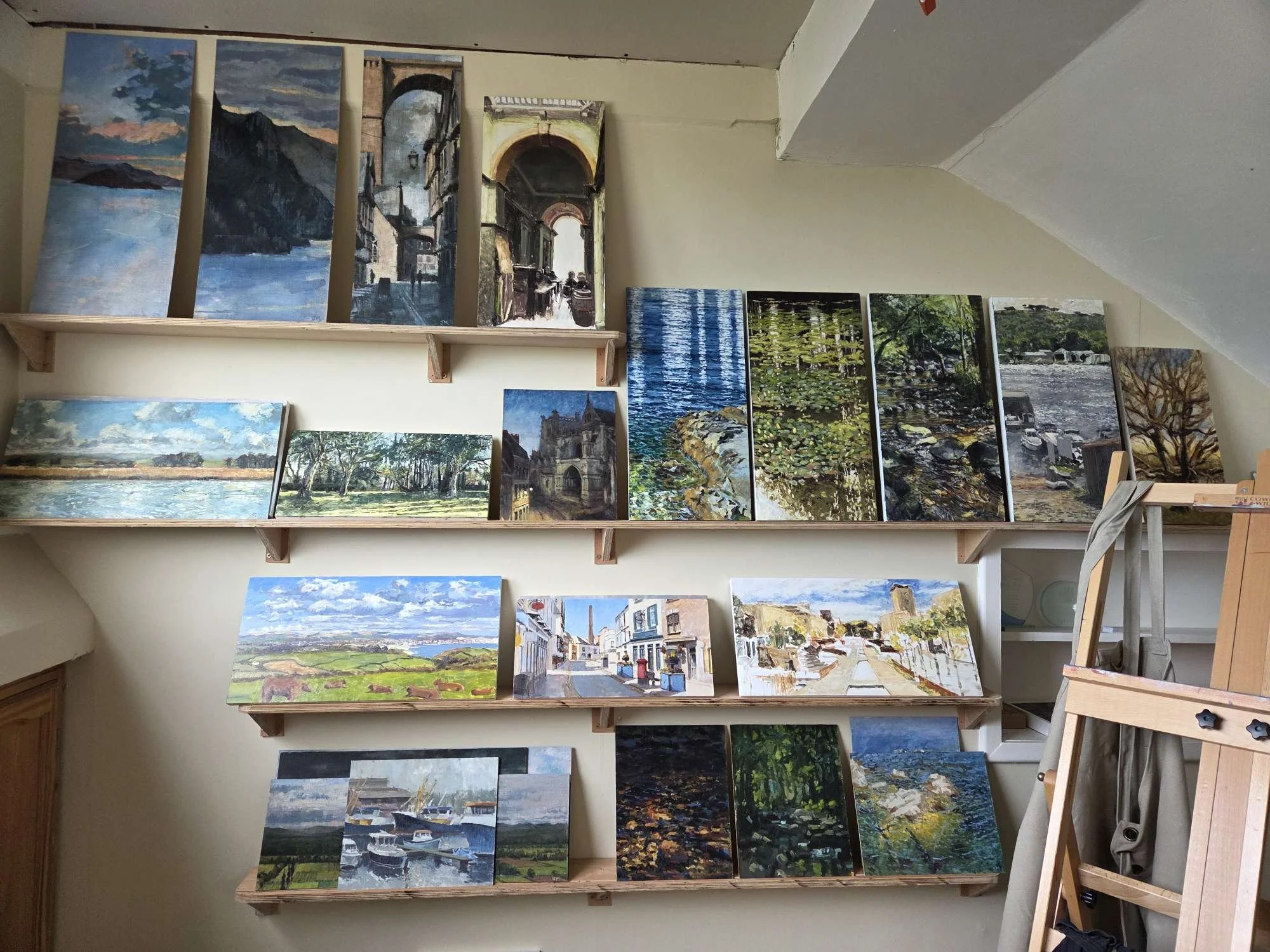
Some of the paintings which will be in the exhibition.
My first solo exhibition! Which will coincide with what will now be the Autumn Sale! So come and join me on 16th-18th October (email me for the location) where I’ll be converting my wife’s lovely clinic room (thank you so much) into a gallery and studio space for the weekend, where I’ll be hanging all my paintings so far. And if you want to see how I paint, I’ll be doing two painting demonstrations on the Saturday and Sunday mornings.
Opening times are:
Friday October 16th, 5pm-8pm
Saturday October 17th, 10am - 5pm (painting demonstration 10am - 11:30am)
Sunday October 17th, 10am- 5pm (painting demonstration 10am-11:30am)
It will be lovely to see you if you’d like to come. All of the pieces on display will be for sale, and I will try to photograph them and send them out to you with prices in advance if I can manage it. Although the kitchen work is going on, I am now confident that you will have good access and a floor to walk on!
Part of the reason I am doing this is because the 16-18th October is the Plymouth Art Weekender, which is a city-wide event where especially independent artists and smaller arts organisations open their doors and you get a chance to see what normally is hidden. So a big thank you to the Art Weekender team for organising this. Unlike other events (like Devon Open Studios) where artists have to pay a big fee to be listed and included in the programme, the Weekender is free! Which makes a huge difference to emerging artists who can’t necessarily afford to take the financial risk.
I was also hoping to be able to launch my podcast and videos at the same time, but unfortunately I think these will have to wait for a bit longer before they come out.
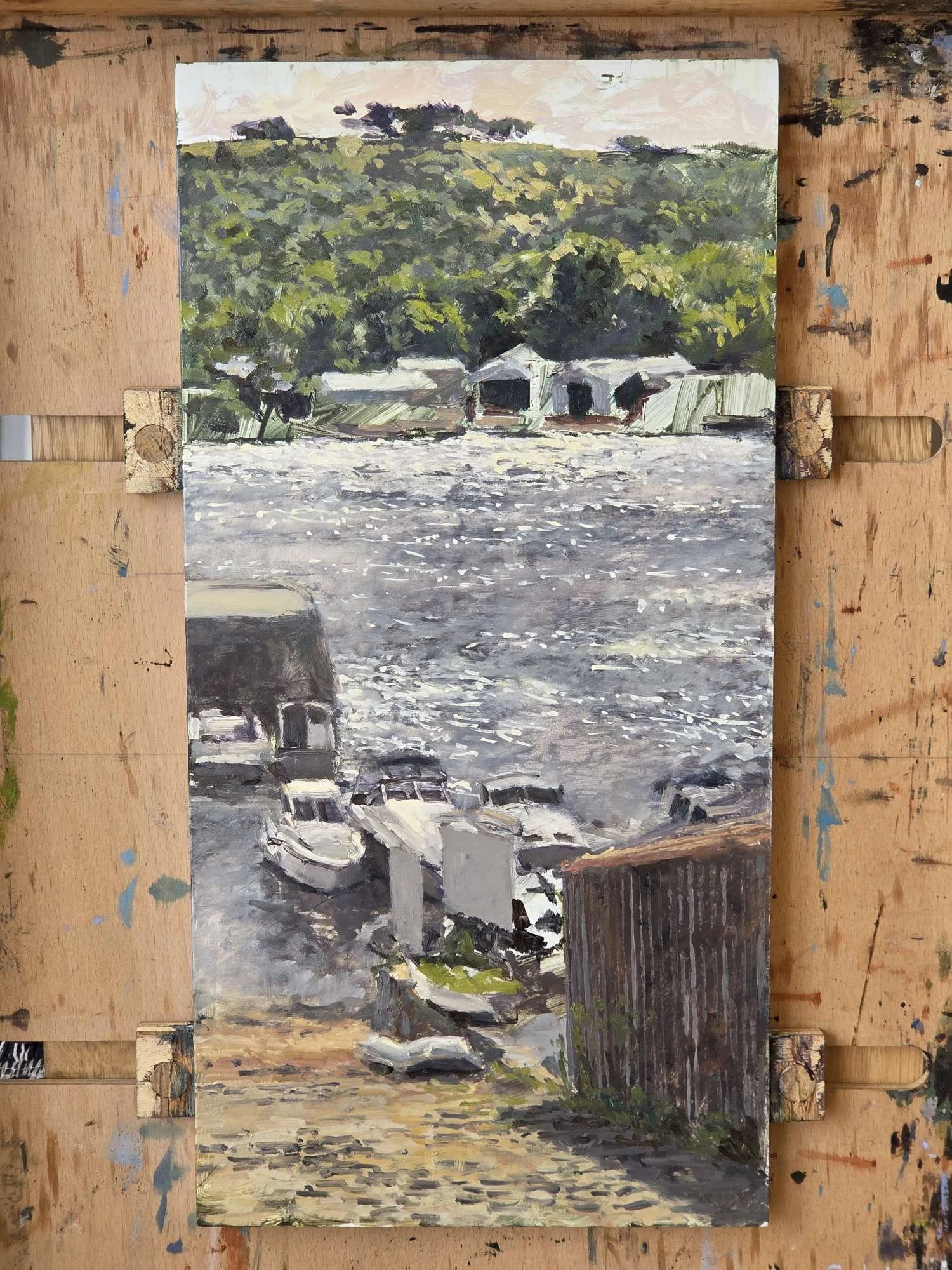
A more recent painting I have been working on at Mutton Cove.
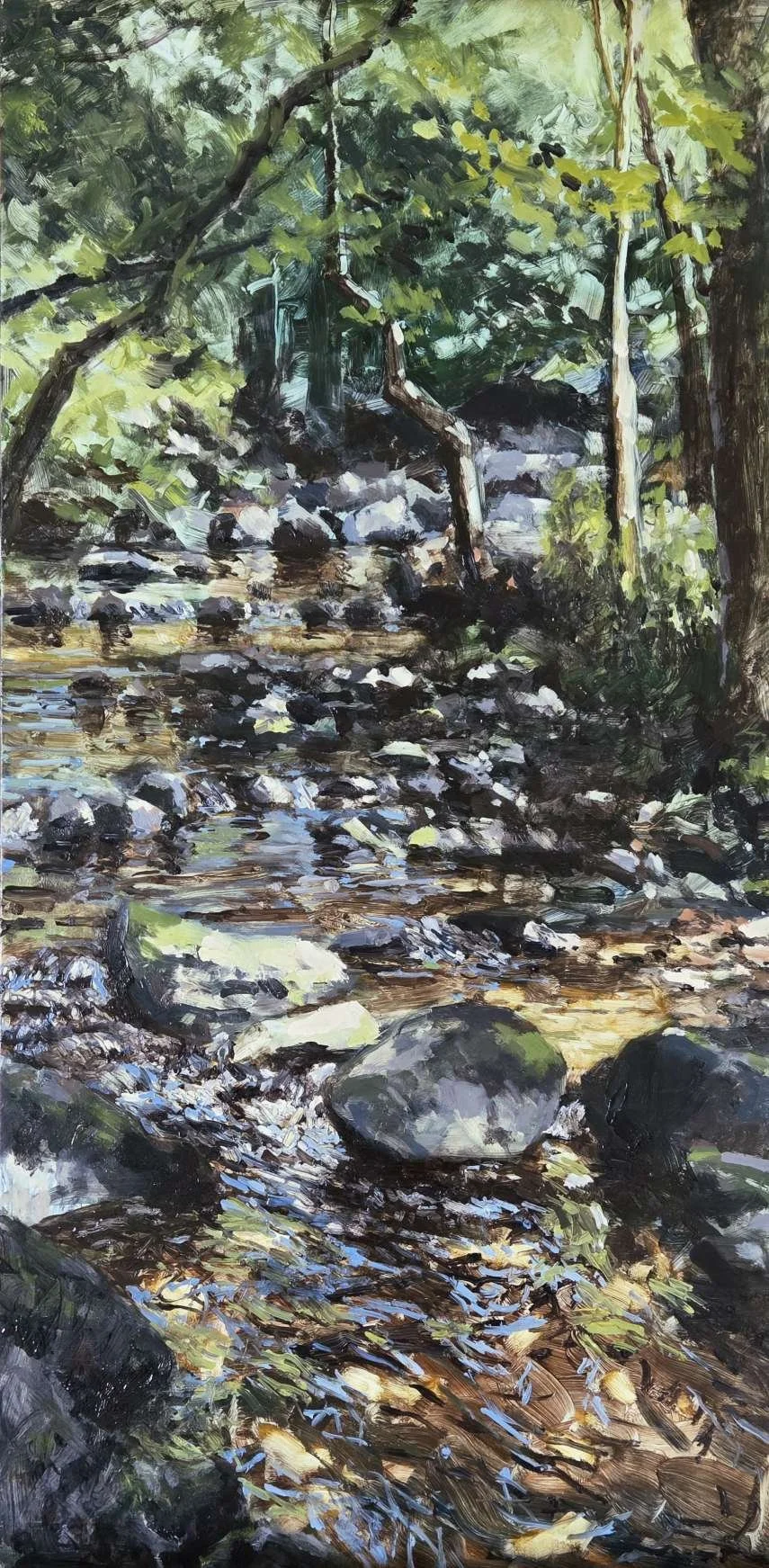
I have been glazing this one to help bring out the light and darker tones.
National Gallery Art Trail in Torquay
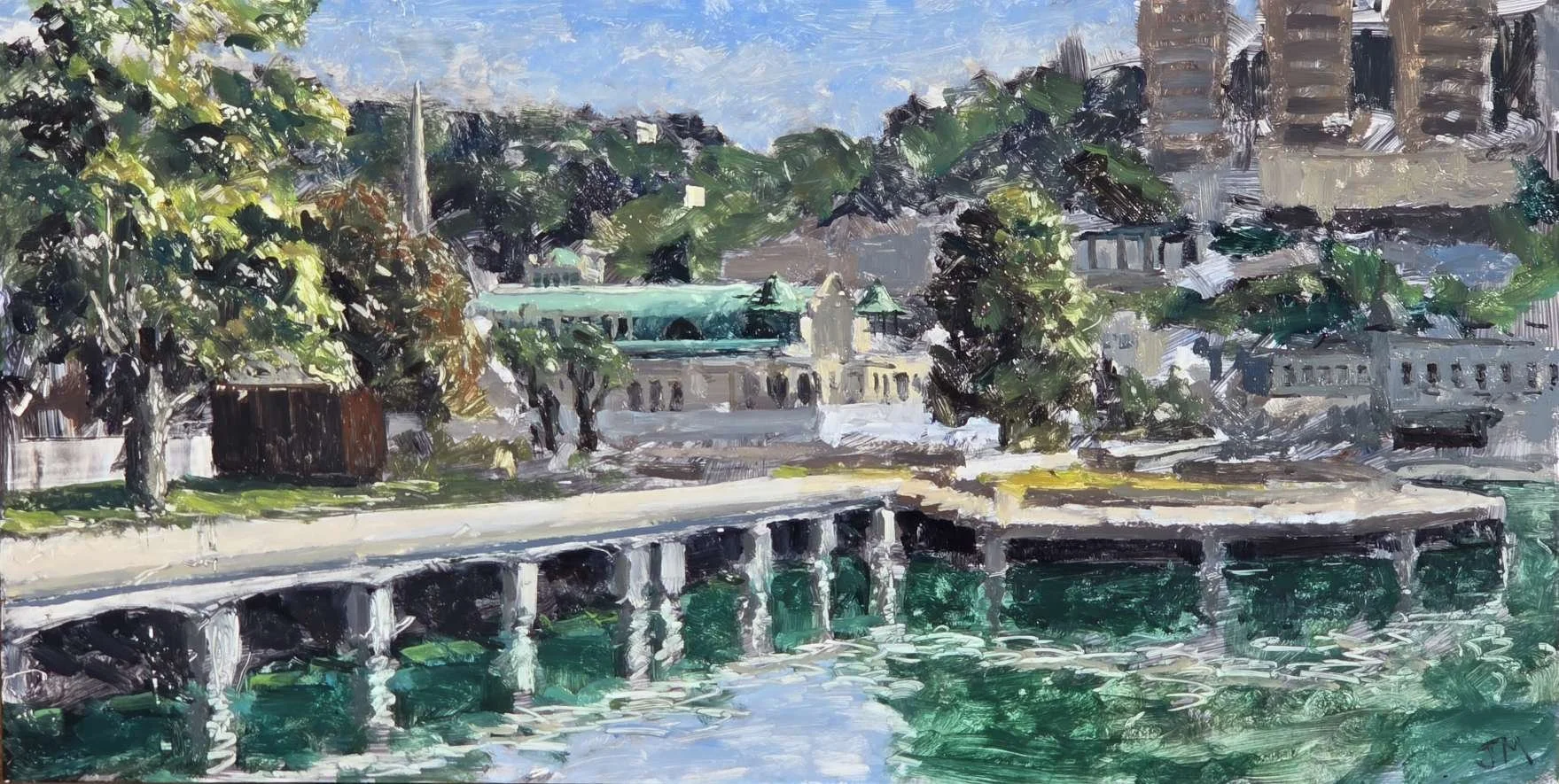
My painting from Princess Pier.
Torquay has been one of the locations for a National Gallery Art Trail, where paintings from the National Gallery have been reproduced and displayed around the city. To mark their final weekend, local partners Torre Abbey and Artisan Gallery paid 10 artists (including me) to paint at set locations around the town, talking to the public and people following the art trail. It was a very good day, but I feel hoarse now still! I was based at Princess Pier, painting the view looking back towards the Pavilion, which is thankfully now being refurbished after years of decline. This was quite a tricky painting to tackle in one sitting, with lots of visual ‘noise’ which required decisive editing of what to include and what to omit.
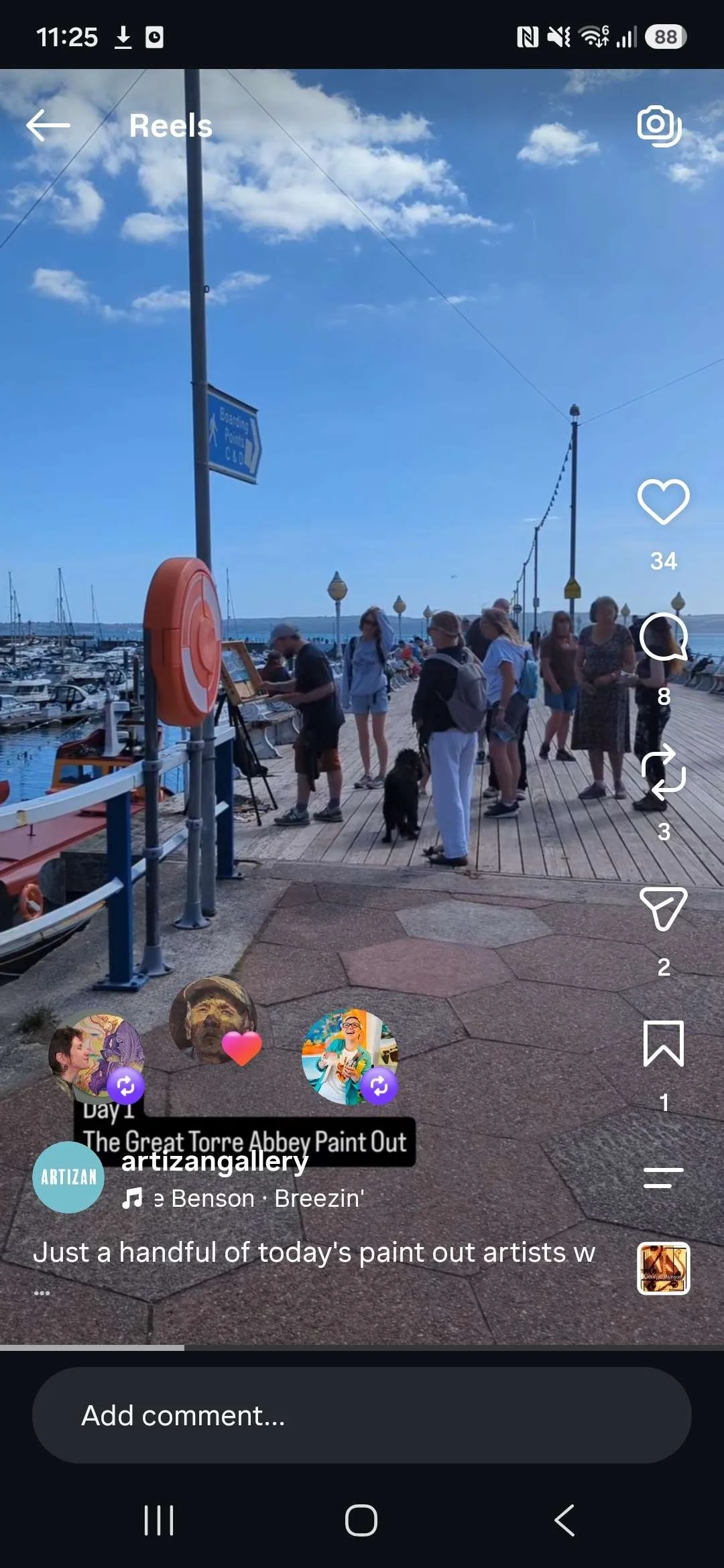
It was busy on the day!
If you want to see this painting and you are in Torquay, you can! There’s an exhibition at Torre Abbey which runs from 2nd October (4-6pm private view) until 21st December. Torre Abbey is well worth a look around, being both a historic site and an art gallery, with great gardens, and it’s an honour to be included in the exhibition.
The day afterwards, Torre Abbey and Artisan Gallery also held a plein air competition, where I created this painting in their huge greenhouse. I’m keeping this one with me for the Art Weekender Show, so you can come and view it in person then. I really enjoyed it and tried a new colour palette, which has reignited my hatred of the lack of subtlety in the pthalo pigments.
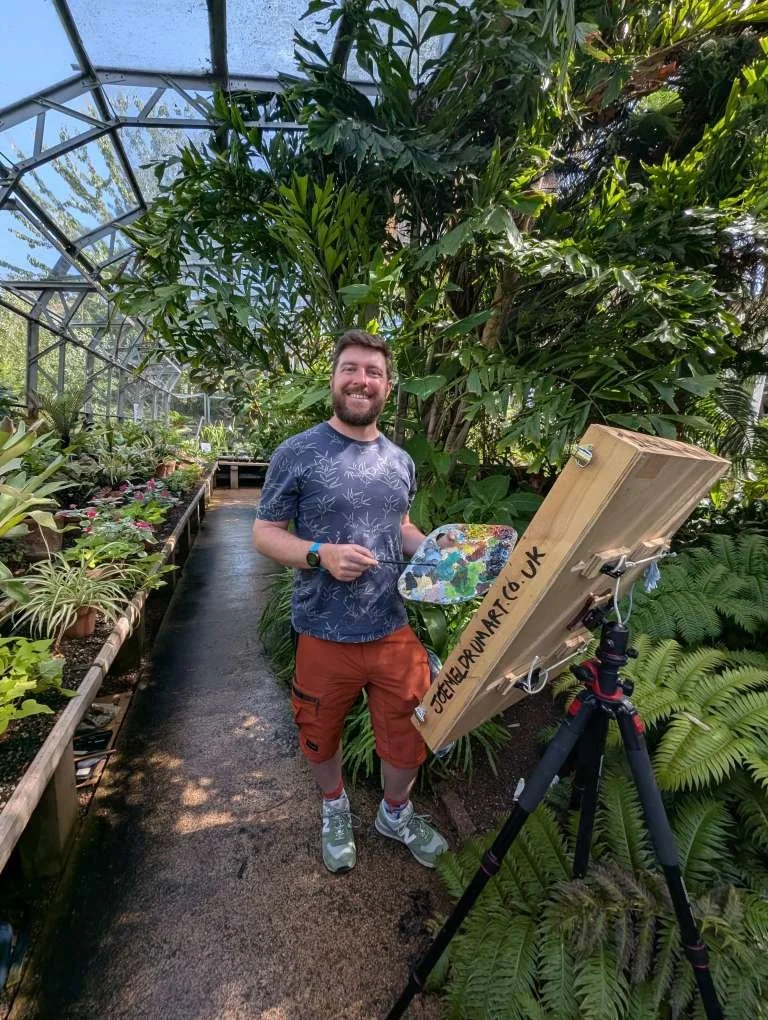
Painting in the greenhouse at Torre Abbey.
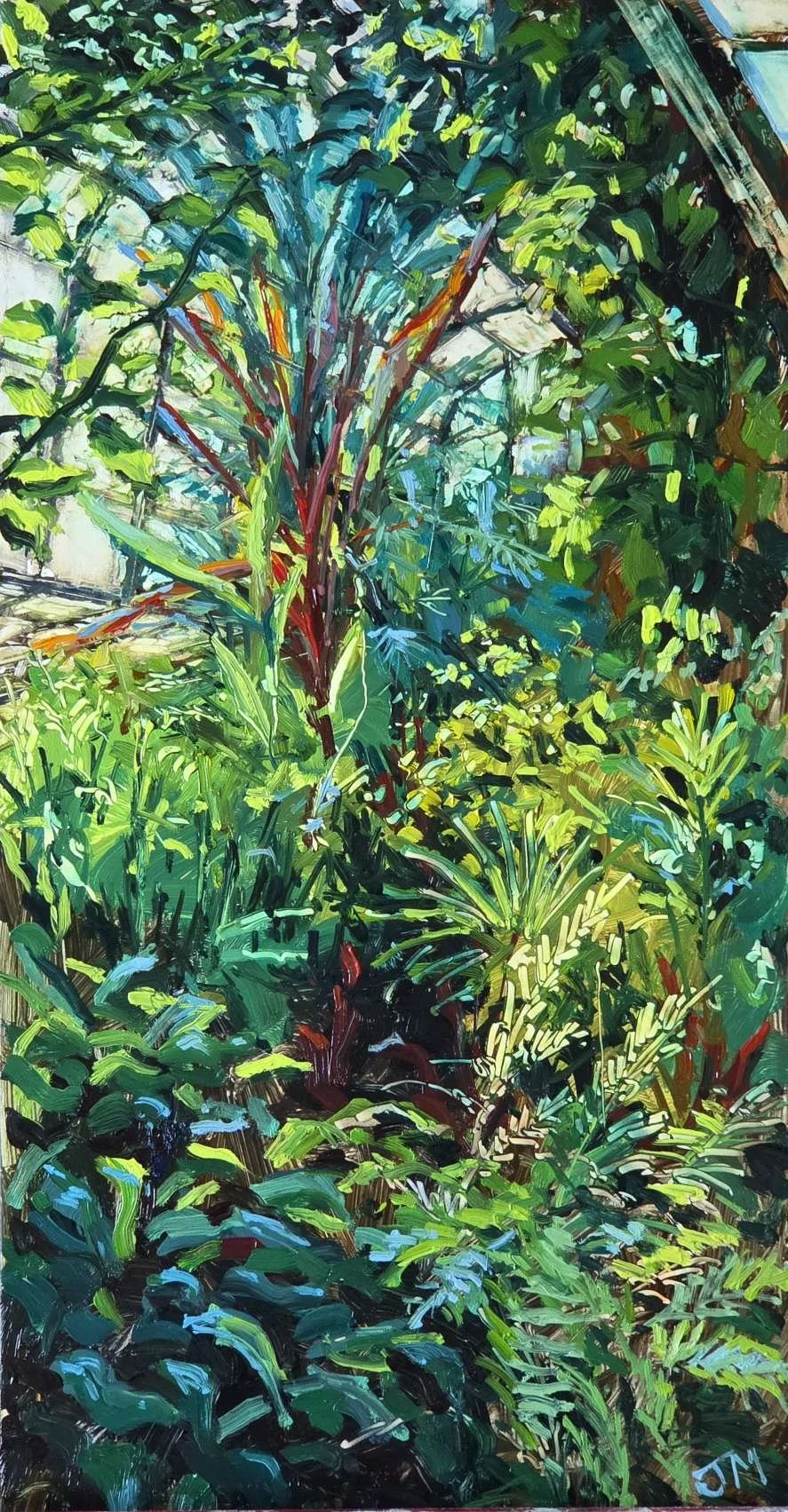
All of the greens!
The plein air competition was a great day. I was really pleased to catch up with artists Stephen Hawkins and Debbie Birdsey (check out their work, they are excellent painters) and also my mate Gabrielle Peckham, who was the overall winner with this beauty of an artwork! I often find isolated colours distracting, but I loved how she used the purple against the greens to push the sense of distance, all while using touches of ochre to unify the painting.
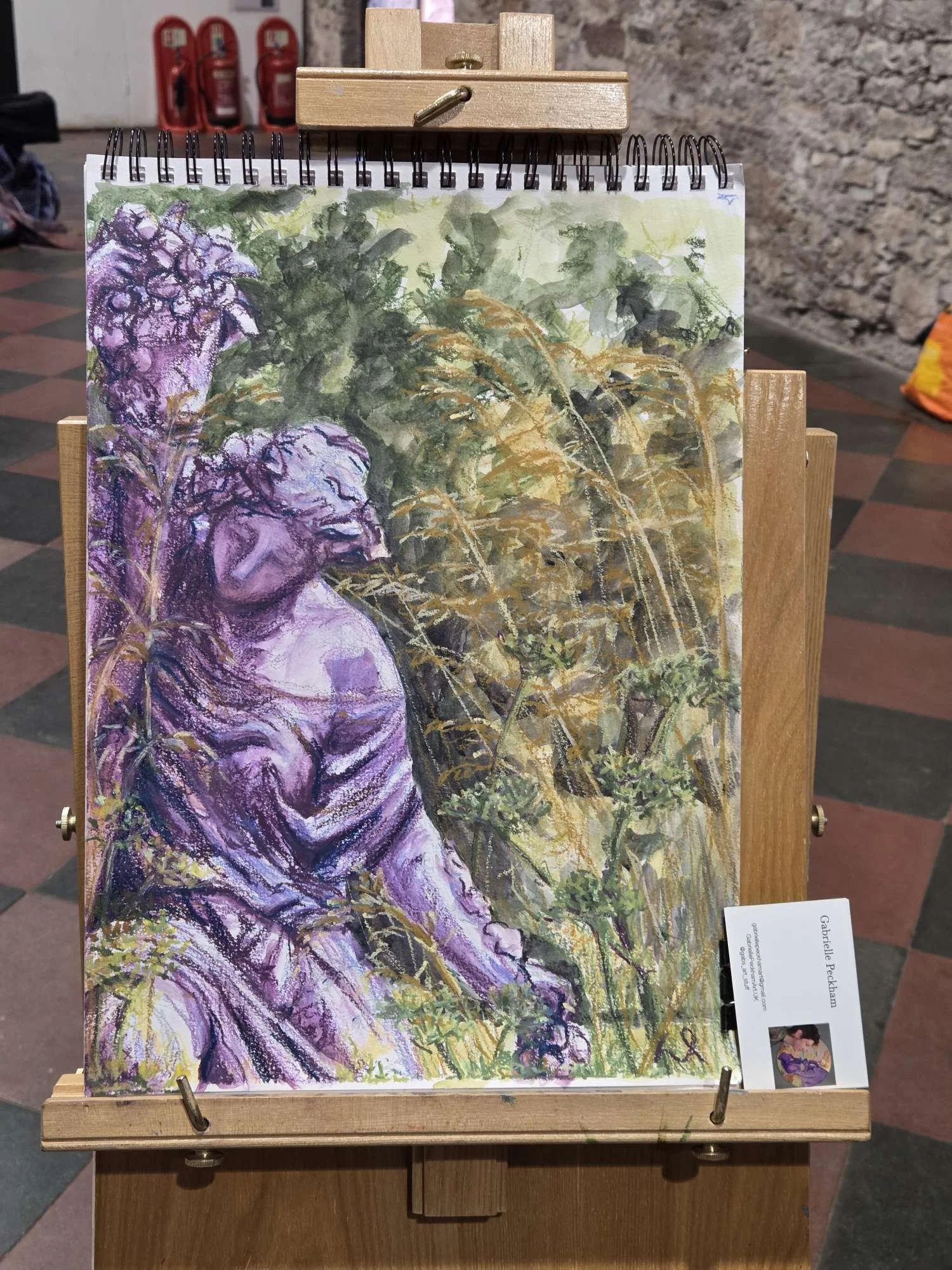
Gabrielle’s winning artwork.
Whistler at the Tate Britain and Waldmüller at the National Gallery
I actually managed to go to London and see a couple of exhibitions in August. I caught the James McNeil Whistler show at the Tate Britain (if you are my age, one of his works was the centrepiece of the Mr Bean movie where Bean wipes the face off the Whistler’s Mother painting). He was a very interesting painter, but I was a bit underwhelmed. His compositions and use of large areas of flat colour are incredible, but his actual painting style is too underworked to the point of distraction. There are far better painters of his era, and I am not quite sure what all the hype about his work is about.
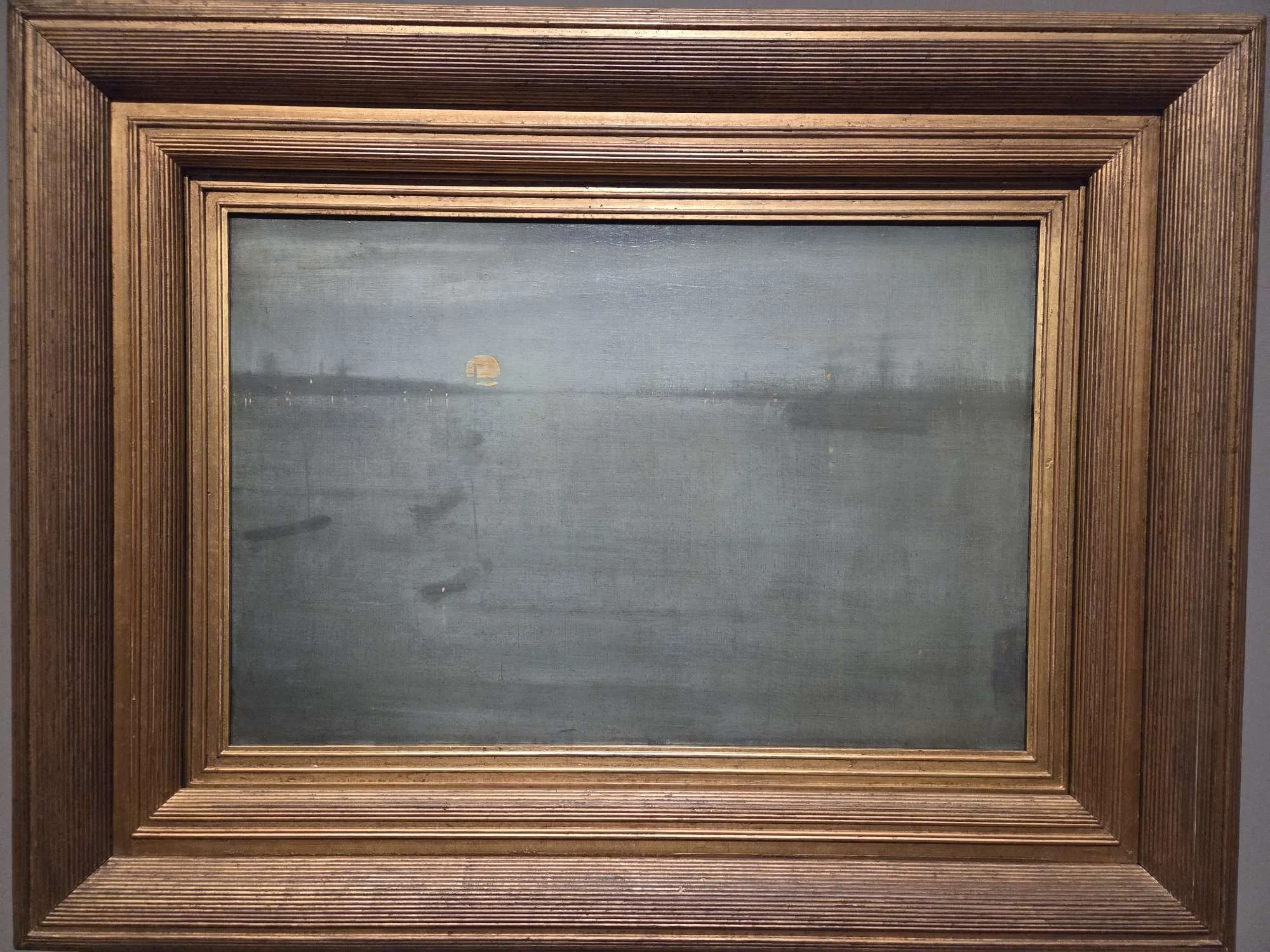
One of Whistler’s nocturnes.
Far more interesting to me was a room at the National Gallery dedicated to Ferdinand Georg Waldmüller, a painter I’d never heard of. He was an Austrian painter from the mid 1800s who captured landscapes in a remarkable way, painting on smooth panels with transparent pigments, scratching and wiping at the paint to allow the light to come through. He was painting outdoors around the same time at the Barbizon school of painters (French painters in the 1820s who are credited with being the first to paint outdoors in the Barbizon Forest near Paris, hence the name). But Waldmüller was doing the same, independently, in the Austrian Alps at the same time. And his work is incredible. So much so that I had to do a bit of a study of a small area of his painting to work out what pigments he used and how he painted with a round brush (flat brushes only becoming more widely used in the 1840-1850s). Round brushes are very hard to use on a flat panel painting because, unlike a flat brush, they do not apply pressure evenly - they remove paint in the middle of the brush where the bristles are thicker, and deposit paint around the edges where the bristles are further away from the surface. But Waldmüller used this to his advantage. Unlike the Barbizon painters who used thick, opaque, pigments where the colour you mix on your palette is already the end result, Waldmüller used transparent pigments, which are far harder to use outdoors quickly - you are not only dealing with the mixed colours of your pigments, but also the amount of white from the panel which they are allowing through. His paintings are small, much smaller than you would think looking at the details of his work online. And up close they become abstract, a loose collection of marks and wipes which only coalesce when you stand back. I think the round brush helped force the use of transparent pigments and his amazing layered mark-making.
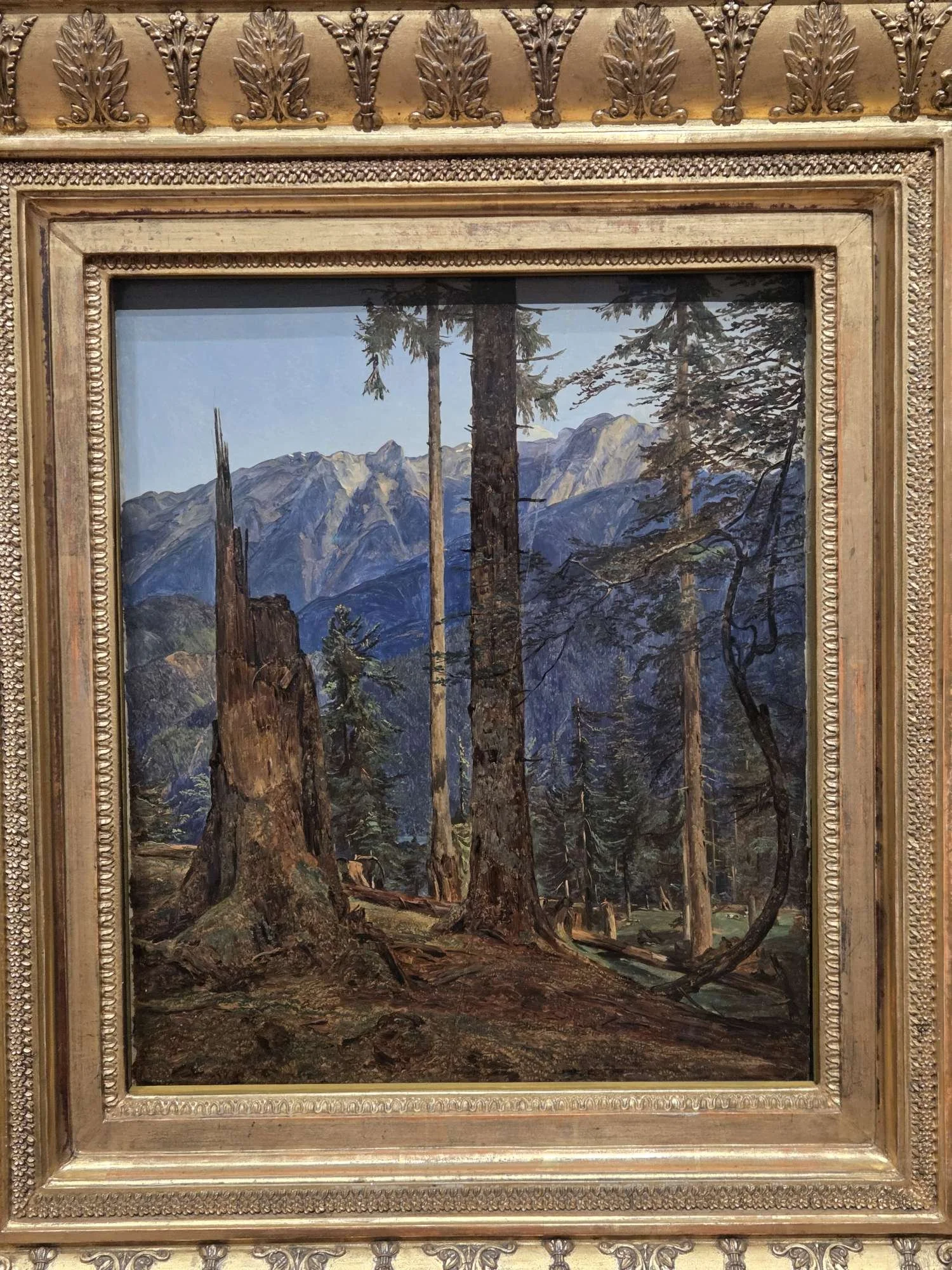
The light coming through the paint!
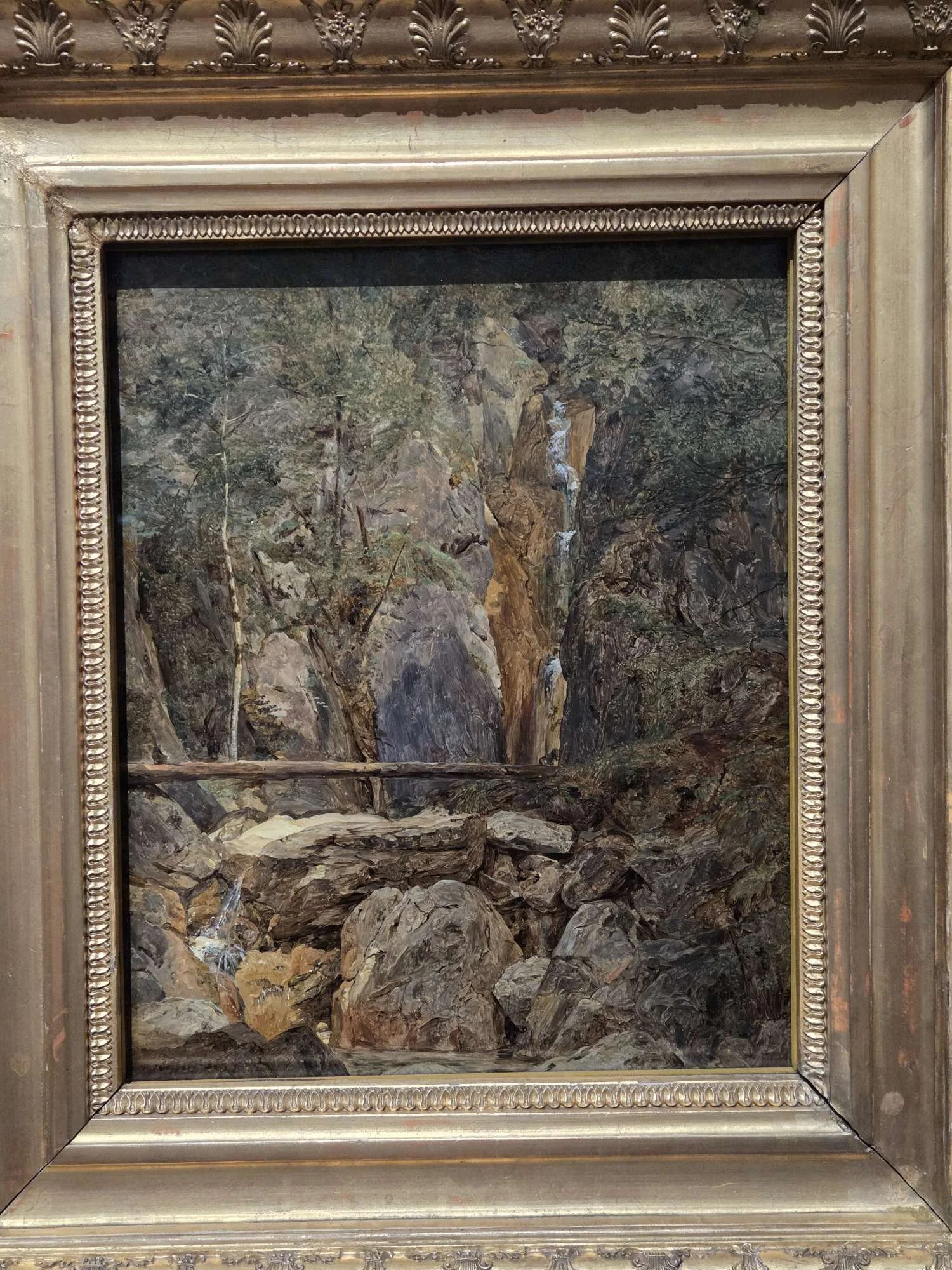
Unbelievable abstraction when you get up close to it.
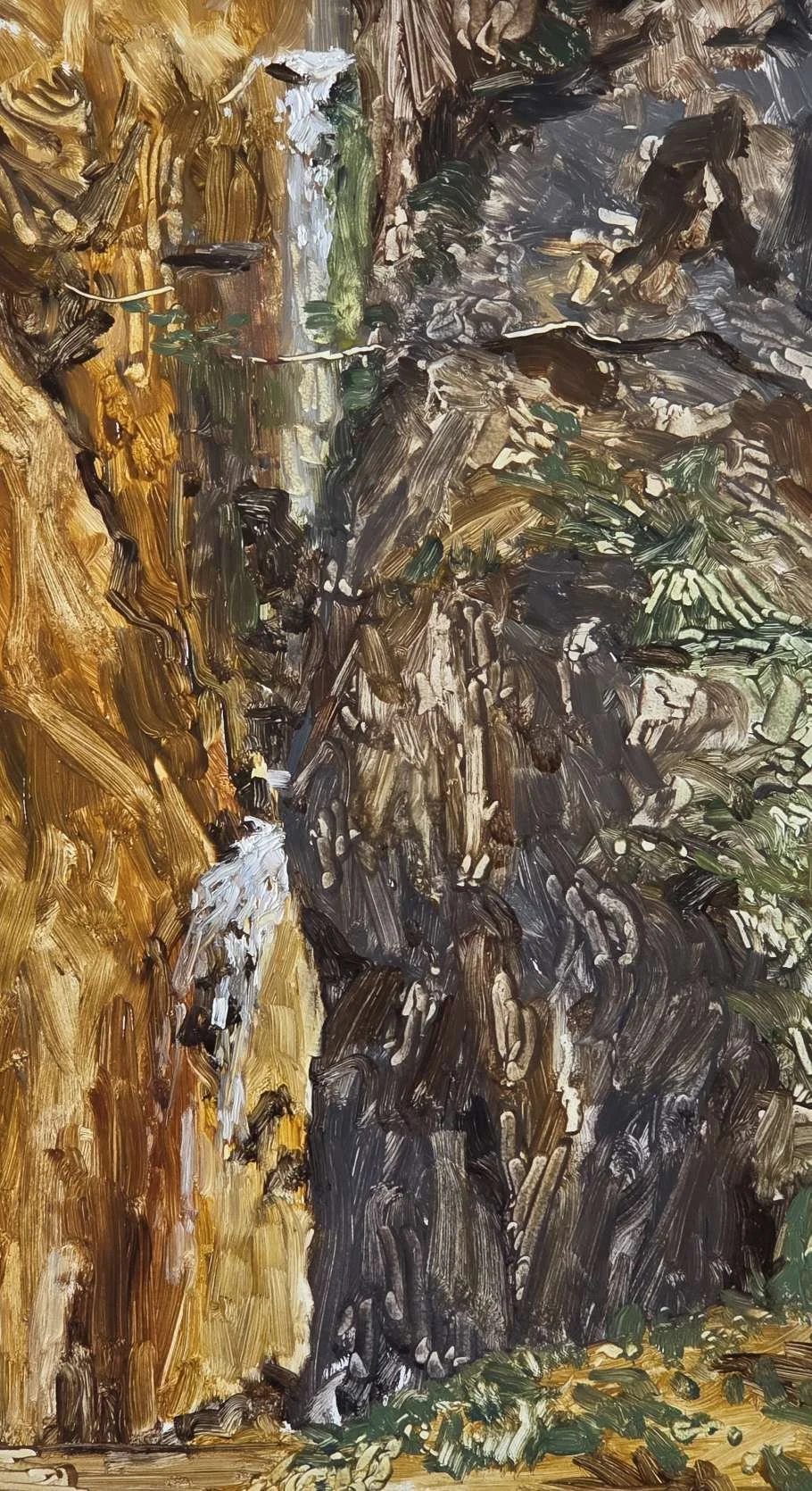
My study to understand what pigments Waldmüller used, how he used oils and thinners in his mixes, and how he wiped and scratched to reveal details.
Anyway, there’s my news and catch up. I hope you can come and join me at the exhibition on 16th-18th October!
Thank you again!
As always, thank you so much for being a subscriber and for all your help, support and love! It’s a pleasure to be able to share my art journey with you all and build connections with people who love painting - whether that’s viewing them, creating them or learning how to paint. If there’s anything you’d like to chat about, please please just send me an email (address included in my original newsletter only) or message on social media. I love to hear from you!
If you have missed any previous newsletters, do not worry! They are available here.
